What did we learn about epiphytes in the past two weeks?
Epiphyte Biweekly rounds up newly published research on epiphytes and related plant groups. We follow the orchids, ferns, bromeliads, aroids, gesneriads and cacti that grow on trees and rock faces, and the ant plants that house ants. This issue has no items on gesneriads or ant plants. Every item comes in an in-depth and a plain-language version, with a link to the source.
This issue covers 16 studies, 2 of them preprints or theses.
Staghorn & epiphytic ferns2
PaywalledAbstract onlyJournal of Molecular Evolution · 2026-11-14
In staghorn fern chloroplast genes, CpG and certain other pairs are scarcer where neighbouring codons meet than a random arrangement would predict
Take the synonymous codons1 in the plastomes (chloroplast genomes) of staghorn ferns (Platycerium) and reshuffle them within each gene, so that the protein sequence stays the same and so does the count of every codon. The real sequences still differ from the shuffled ones: among the 'boundary dinucleotides' formed by the third position of one codon and the first position of the next, CpG is scarcer than expected. That is the main finding of this paper. It concerns how codons are arranged within genes, not how often each codon is used; as to why they are arranged this way, the paper gives no answer.
The material is the plastomes of 18 Platycerium species, in which 44 genes were analysed; none of these genes carries an RNA-editing exception flag in the reference annotation. The principal method is 'exact-codon conditional randomization'; comparisons of relative synonymous codon usage (RSCU) serve, in the journal version, only as supporting phylogenetic context. The following details come from the earlier preprint: the study used only public sequences, with no newly collected material; shuffling took place only among positions encoding the same amino acid, 9,999 times per sequence; the 18 species fall into three lineages, Afro-American (7 species), Javan-Australian (4) and Malayan-Asian (7); and all 16 boundary dinucleotides were counted, the aim being to avoid reporting only a selection of results.
According to the journal abstract, the direction of the CpG shortfall is seen across species and in most genes, and did not change under a different sequence reconstruction or a higher gene-length threshold; the preprint's figures are that the median effect is negative in all 18 species and in 34 of the 44 genes. TpA is less tidy: the journal abstract says it varies more from gene to gene, and in the preprint only 26 of the 44 genes are negative. Nor is CpG the most strongly skewed combination. The journal abstract states that GpT has the lowest ratio of observed to expected; the preprint's figures are GpT 0.865, CpG 0.887 and TpA 0.933, with 9 of the 16 combinations below 1 and 7 above 1. CpG and TpA are therefore only part of an overall redistribution at the boundaries. These preprint figures may have been revised in the journal version.
On causes, the authors draw no conclusion: whether this arrangement is inherited from a common ancestor, or results from mutation or from constraints of the sequence itself, cannot be told from the present data, and the conclusions are limited to the 18 species and 44 genes sampled. The preprint's discussion adds a caution: the three lineages share a plastid ancestor, so a consistent direction cannot be counted as three independent evolutionary origins. Telling inheritance apart from separate maintenance in each lineage would need a more densely sampled fern phylogeny that includes outgroups, together with ancestral-state reconstruction.
Different codons that encode the same amino acid. ↩
Genes specify amino acids using 'codons', groups of three letters, and the same amino acid can often be written in several ways. This study ran a paper experiment on 44 chloroplast genes from 18 species of staghorn fern (Platycerium). It is rather like swapping the positions of synonyms within an essay: the meaning stays the same and each word appears the same number of times, but the order changes. After many rounds of swapping, the researchers looked back to see where the real genes differ.
The result is that, in the real genes, cases where 'one codon ends in C and the next begins with G' are fewer than expected after random swapping, and this tendency is seen across species and in most genes. This is not the only combination that is scarce, nor is it the most strongly skewed. It is only a statistical pattern of arrangement. The authors themselves say the cause cannot be determined at present, and the study has no direct bearing on the cultivation of staghorn ferns or on their epiphytic habit.
Open accessAsian Journal of Dairy and Food Research · 2026-11-13 · Kolli Hills, Namakkal District, Tamil Nadu, India
Indian team analyses the nutrients, fatty acids and thermal properties of Drynaria quercifolia rhizome powder: preliminary compositional data for judging whether it could serve as a food ingredient, with no safety testing yet
Drynaria quercifolia is a fern of the family Polypodiaceae. It has a local name in the Indian state of Tamil Nadu and is traditionally used for bone and joint complaints. The authors point out that earlier work consisted mostly of pharmacological tests on extracts and seldom described the rhizome powder itself as a food ingredient, so this paper measures nutritional composition, vitamins, fatty acids, anti-nutritional factors, functional groups and thermal properties all at once.
The material was fresh rhizomes collected on 8 March 2025 in the Kolli Hills (about 1300 m above sea level), Namakkal District, Tamil Nadu, and authenticated by the Botanical Survey of India. One kilogram of rhizomes was washed, stripped of the woolly brown scales on the surface and grated; ten days of shade drying gave 247.4 g of dried material, which was then ground to powder. All analyses come from this single batch, each assay was run as three technical replicates, and values are given on a dry-weight basis.
Per 100 g, the rhizome powder contains 14.26 g of protein, 11.42 g of crude fat, 59.87 g of carbohydrate and 31.10 g of total dietary fibre (9.00 soluble, 22.10 insoluble), with 20.67 mg of vitamin C and 10 mg of vitamin E. The fatty acids are dominated by palmitic acid (36.6% of relative peak area) and linoleic acid (34.9%). However, the total fatty acids measured by gas chromatography came to only 2.46 g, far below the 11.42 g of crude fat, and the authors think the gap may come from fat-soluble constituents that are not fatty acids. As for anti-nutritional factors, oxalate was 247.92 mg and phytate 427.14 mg (per 100 g), which the authors consider comparable to literature values for green leafy vegetables and legumes.
The infrared spectrum showed 12 absorption peaks, corresponding to functional groups such as alcohols, phenols, carboxylic acids and aromatic compounds. Thermogravimetric analysis showed that the main decomposition took place between 60 and 550 °C, with a weight loss of 74.8%, and a loss of 88.6% over the whole run. The authors present these results as preliminary baseline data at the ingredient level, and say that studies of microbial safety, bioavailability, processing effects and bioactivity are still needed before any functional application is discussed.
In the Indian state of Tamil Nadu, the rhizome of the fern Drynaria quercifolia is a traditional herbal remedy for bones and joints. A team from a food science and nutrition department in India stripped the rhizomes of their scales, grated them, dried them in the shade and ground them to powder. Then, much as one might test a new kind of flour, they measured its protein, fibre, fatty acids and vitamins, along with constituents such as oxalate and phytate that may hinder the absorption of nutrients, and also tested how the powder changes when heated.
The measurements show a fair amount of fibre (about 31 g per 100 g) and about 14 g of protein. But this is only a composition table for one batch of samples. There were no tests of how much is absorbed when it is eaten, whether it is safe, or whether it has any effect; the authors themselves say that all of these need separate study before any application can be considered.
Pramitha, J. D., & Raajeswari, P. (2026). Nutritional, structural, thermal and bioactive characterization of Drynaria quercifolia (L.) J.Sm rhizome. Asian Journal of Dairy and Food Research. Advance online publication. doi:10.18805/ajdfr.dr-2533
Orchids8
Open accessAbstract onlyActa Botanica Mexicana · 2026-11-09
Flower visitors of Mormodes maculata: one orchid bee carried a pollinarium stuck to the side of its body, a position that matches the flower's handedness
An orchid bee, Euglossa obrima, carrying a Mormodes maculata pollinarium1 stuck to the side of its body is the single most important observation in this study. On that basis the authors identify this bee as the pollinator of M. maculata, reasoning that a pollinarium attached to the side fits the one-sided structure of this flower.
Mormodes belongs to the orchid subtribe Catasetinae. According to the authors, it is the only orchid genus whose flowers show floral handedness (enantiostyly). This is generally presumed to help cross-pollination, yet very little is known so far about who pollinates these plants or how they reproduce. The field observations covered 12 flowering plants of M. maculata, including two varieties, M. maculata var. maculata and M. maculata var. unicolor; the authors captured and identified the visiting insects and recorded where on the bee's body the pollinarium was attached. We have read only the abstract, which does not state the study site, the year or the hours of observation.
Another bee, Eulaema polychroma, was only an occasional visitor and was recorded only on flowers of var. maculata; the authors saw no evidence that it pollinates effectively. Taking these observations together, the authors consider pollination in M. maculata to be highly specialised, relying on the interplay between the flower's handedness and a specialised orchid bee, and recommend that this be taken into account when conservation strategies for the species are drawn up.
A pollinarium is the whole unit made up of the pollinia together with their stalk and viscidium (sticky pad); this explanation is background knowledge, not from the paper. ↩
Most orchid flowers are bilaterally symmetrical, but the genus Mormodes is different: the structure of the flower leans to one side. Researchers watched 12 flowering plants of Mormodes maculata in the field to find out who visits the flowers and where on the visitor's body the pollinarium, the flower's package of pollen, ends up.
They observed an orchid bee named Euglossa obrima with the pollinarium stuck to the side of its body, which corresponds neatly to the way this flower is skewed to one side. Another bee, Eulaema polychroma, also turns up occasionally, but was not seen to help with pollination. On this basis the authors think this orchid depends heavily on a particular bee, and recommend that this dependence be taken into account when conservation strategies are drawn up.
Hernández-Rivera, Á., Milet-Pinheiro, P., Gutiérrez-Rodríguez, B. E., & Sánchez-Rodríguez, J. D. (2026). Floral visitors of Mormodes maculata (Orchidaceae, Catasetinae) and pollinarium placement on a specialized orchid bee. Acta Botanica Mexicana, (133). doi:10.21829/abm133.2026.2643
Open accessEntomological Communications · 2026-11-09 · Brazil (Piracicaba, São Paulo state; Ananindeua, Pará state; cultivated plants in Rondônia and Goiás states)
A weevil that damages Catasetum flowers: Brazilian study gives the first description of the life cycle of Stethobaroides scutellatus, whose larvae grow up almost only in male flowers
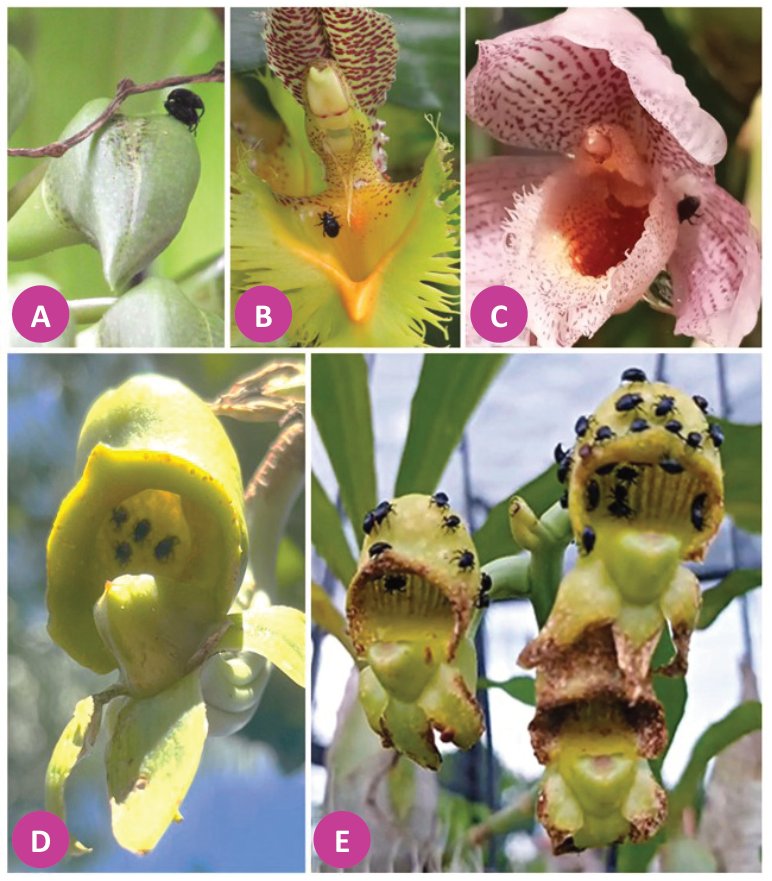
Adults of Stethobaroides scutellatus on buds and flowers of Catasetum. (A) Adults mating on a flower bud of C. fimbriatum; (B) an adult inside a male flower of C. fimbriatum; (C) an adult on a male flower of the intergeneric hybrid Clowesetum Leprechaun; (D) adults on female flowers of C. fimbriatum, photographed in Piracicaba; (E) adults on female flowers of Catasetum sp., photographed in Goiás state.Image: Medeiros et al. (2026), Entomological Communications 8: ec08044, Fig. 2, CC BY 4.0, The whole of Figure 2 (with panel labels A to E) was extracted from page 2 of the paper's PDF; individual panels were not cropped; saved as JPEG.
Orchid collections around the world are increasingly under threat from specialist herbivores carried in unnoticed with the plant trade, yet basic biological data on these species are often missing. Stethobaroides scutellatus is a weevil of the family Curculionidae, subfamily Baridinae. Only in 2025 was it reported damaging the flowers of 13 species of Catasetum in a university nursery in the Brazilian state of Mato Grosso, and its life cycle had never been studied. This short note fills that gap, with Catasetum fimbriatum and Catasetum macrocarpum as its main study subjects.
Observations were made during the flowering seasons of December 2021 to January 2022, December 2024 and March 2026. For naturally occurring plants, the authors observed C. fimbriatum growing as an epiphyte on trees on a campus in Piracicaba, São Paulo state, and C. macrocarpum in an urban area of Ananindeua, Pará state; the cultivated plants came from collections in the states of Rondônia and Goiás. They monitored 18 plants of C. fimbriatum (6 bearing female flowers, 12 bearing male flowers) and 2 plants of C. macrocarpum, and dissected flowers five to seven days after opening: 53 female and 104 male flowers of C. fimbriatum, and 2 female and 8 male flowers of C. macrocarpum. Flowers containing larvae were also placed in containers of sterilised soil and reared until the adults emerged.
The adults move about and mate on flowers and buds, and pierce the floral tissue with the rostrum; only one egg was seen in each oviposition hole. After hatching, the larvae first eat the labellum, then tunnel towards the column, less often into the petals and occasionally into the pedicel; about 7 to 10 days after hatching they leave the flower and burrow into the soil to pupate. The time from pupation to adult emergence was 25 to 30 days for those from C. fimbriatum (n = 10) and 18 to 20 days for those from C. macrocarpum (n = 4); from egg hatch to adult emergence the total was 25 to 40 days. All 104 male flowers of C. fimbriatum showed signs of damage, and 54 of them contained larvae (52%), with up to 8 in a single flower; 107 larvae were removed in all, 81 from the labellum, 24 from the column and 2 from the pedicel. Of the 53 female flowers, 16 had no obvious damage, 35 had only feeding marks, and just 2 contained live larvae (3.8%). Each of the 8 male flowers of C. macrocarpum held 2 larvae, all in the column; the 2 female flowers showed no damage.
From this the authors put forward a hypothesis: male flowers drop off naturally at the end of flowering, so mature larvae can fall to the ground with them and pupate; female flowers stay on the plant and develop into fruit, so the larvae cannot easily reach the soil, and development is therefore completed almost only in male flowers. The host list is also extended to C. pileatum, C. hookeri, C. osculatum, C. denticulatum and C. complanatum, plus two artificial hybrids (Catasetum Grigorio Leao and the intergeneric hybrid Clowesetum Leprechaun). The control measures the authors suggest are routine inspection during flowering, removing and destroying damaged flowers as soon as possible, replacing or sterilising the substrate after an outbreak, and quarantining newly acquired plants; these suggestions have not been tested in control trials.
In Brazil, if the flowers of a Catasetum orchid are chewed full of holes almost as soon as they open, the culprit may be a weevil, Stethobaroides scutellatus. All the observations in this study come from Brazil, and the researchers have recorded in detail, for the first time, how the insect gets from egg to adult: the female bores into newly opened flowers to lay her eggs, the larvae eat their way from the lip to the column, drop into the soil to pupate after about a week to ten days, and turn into adults eighteen to thirty days after that.
Male and female Catasetum flowers look different, and the larvae of this weevil turn up almost entirely in male flowers. The researchers guess that this may be because male flowers fall off by themselves once they have finished flowering, which conveniently delivers the larvae to the ground; female flowers have to stay on the plant to set fruit, so the larvae cannot get down. The authors advise removing and destroying damaged flowers as soon as they are seen, replacing or sterilising any growing medium that has had an infestation, and keeping newly bought plants apart for observation; these suggestions have not yet been tested in control trials.
Medeiros, A. da S., Sanz-Veiga, P. A., Savaris, M., Petini-Benelli, A., Mazine, F. F., & Palmieri, L. (2026). Life cycle and floral herbivory of the weevil Stethobaroides scutellatus Casey, 1922 (Coleoptera: Curculionidae) on a widespread Neotropical orchid. Entomological Communications, 8, ec08044. doi:10.37486/2675-1305.ec08044
Open accessHorticulturae · 2026-11-09 · Hainan, China (Haikou, Ding'an, Tunchang)
In Hainan areca plantations with Dendrobium nobile tied to the trunks, the bacterial and fungal communities on the bark differ from those in areca monocultures, but the causes cannot yet be separated
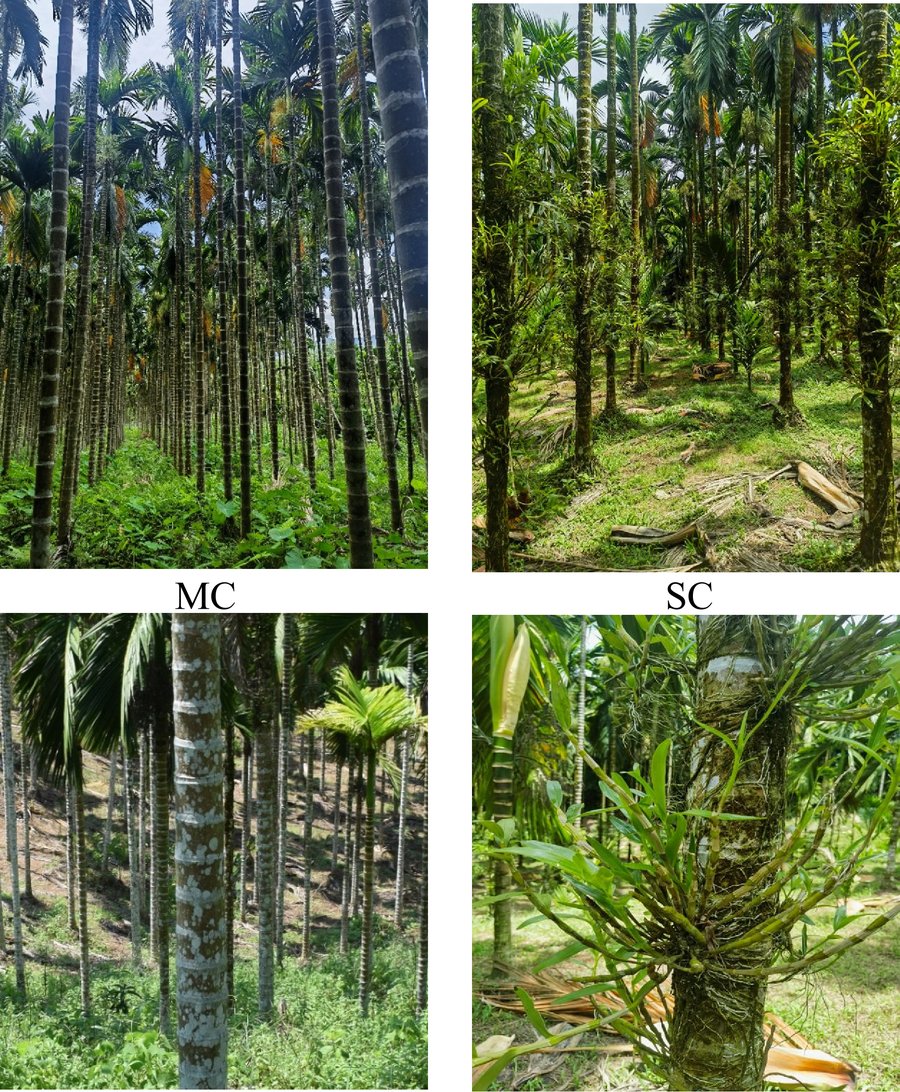
In Hainan, farmers grow Dendrobium nobile by tying it to the trunks of areca palms (Areca catechu), a practice the paper calls 'stereo cultivation'. Earlier studies mostly looked at the microbes of the Dendrobium roots. This one asks about the host's side instead: do the microbial communities on areca bark differ between plantations with D. nobile and plantations without it?
The authors found one farm in each of three places, Haikou, Ding'an and Tunchang, and compared existing stereo-cultivation and areca-monoculture areas within the same farm; stereo cultivation at the three sites began in 2018, 2020 and 2022 respectively. The D. nobile plants are fixed with hemp rope to the trunk between 0.8 and 3 m above the ground, with cow dung applied around their roots, whereas the monoculture areas have neither D. nobile nor cow dung. In early November 2023, three plots were sampled for each cultivation system at each site. In each plot, bark was scraped from three areca palms at 1.5 to 2.0 m above the ground (near the D. nobile root zone in the stereo-cultivation areas) and pooled into one sample, giving 18 samples in all, in which bacteria and fungi were analysed by 16S rRNA and ITS amplicon sequencing. From September to November of the same year, air temperature and relative humidity in the understorey were also measured on one day each month.
Bark in the stereo-cultivation areas had a higher bacterial Shannon index and higher fungal ACE and Chao1 indices than bark in the monoculture areas, and PERMANOVA also indicated that bacterial and fungal community composition differed between the two cultivation systems. The bacteria were dominated by Proteobacteria, Cyanobacteria and Acidobacteriota; the relative abundance of Acidobacteriota was 22.3% under stereo cultivation and 8.46% under monoculture, with the same direction at all three sites. Fungi in both kinds of plantation were dominated by Ascomycota (about 80%), and differences at phylum level were not significant. Mean relative humidity was 72.54% in the stereo-cultivation areas and 68.47% in the monoculture areas, and humidity was linearly correlated with the bacterial Shannon index and the fungal ACE and Chao1 indices.
The authors stress that this is an observational study and treat all the statistics as exploratory. The stereo-cultivation samples were taken beside D. nobile root zones that had received cow dung, so what was measured may be a combined state of 'D. nobile, cow dung and bark' rather than areca bark itself; the separate contributions of D. nobile, cow dung, hemp rope and humidity cannot be told apart. The functional differences obtained from PICRUSt2 and FUNGuild (for example, higher predicted proportions of glycan biosynthesis and metabolism, and of terpenoid and polyketide metabolism pathways, under stereo cultivation) are only inferred from taxonomic composition; they are not metabolic activity that was actually measured.
In the areca plantations of Hainan, some farmers tie Dendrobium nobile to the trunks of the areca palms (Areca catechu) and grow the two together. Researchers wanted to know whether, with a clump of orchids added to the trunk, the bacteria and fungi on the surface of the bark would be different too. In each of three places they compared areas 'with Dendrobium tied on' and areas 'with areca only', scraping off bark for DNA sequencing.
The result is that on bark with Dendrobium tied on, the diversity measures for bacteria and fungi were higher and the make-up of the communities was different, and the air in those plantations was also slightly more humid. But when the farmers tied on the plants they also applied cow dung at the roots and used hemp rope, and the samples happened to be taken right beside the Dendrobium roots. So this study cannot tell whether the differences come from the Dendrobium, the cow dung or the humidity, and the authors themselves present the results as preliminary observations.
Lv, M., Chen, M., Li, C., Zhu, P., Yang, J., Li, S., Yang, F., & Li, C. (2026). Areca catechu bark-associated microbial diversity and community composition: Monoculture vs. stereo cultivation with Dendrobium nobile. Horticulturae, 12(11), 1392. doi:10.3390/horticulturae12111392
Open accessHorticulturae · 2026-11-12
The Dendrobium lindleyi genome holds 21 auxin response factor genes, and one subfamily has expanded to 9 members
Auxin response factors (ARFs) are the transcription factors that switch downstream genes on and off in the plant auxin signalling pathway. Dendrobium lindleyi is a common ornamental dendrobium, but basic research on it is scarce. This paper uses the published genome to take a full inventory of its ARF gene family, and looks at how the expression of these genes changes after the plants are sprayed with auxin.
The authors found 21 ARF genes in the D. lindleyi genome, spread over 13 chromosomes. The genes fall into six subfamilies (Class I to VI); Class III has 9 members and Class IV only 1. They compared D. lindleyi with 14 other species, covering mosses, lycophytes, ferns, gymnosperms and other angiosperms; 7 of the 14 are orchid species or hybrids, such as Vanilla planifolia, Cymbidium sinense and Dendrobium chrysotoxum. Between D. lindleyi and the other orchids there were 76 syntenic ARF gene pairs (pairs sitting in corresponding positions in the two genomes), against only 7 with species outside the orchid family. The orthologous group OGARF1, which corresponds to Class III, has 8 copies in D. lindleyi and only 3 in C. sinense. The Ka/Ks values of these copies are all far below 1, which indicates that the protein sequences are under purifying selection.
The expression experiment used mature seedlings of the Thai ecotype. Leaves were sprayed with indoleacetic acid (IAA) at 1 μmol/L, and stems and leaves were sampled at 0 hours (the mock-treated control), 3, 6 and 12 hours. Under the threshold the authors set, RNA-seq found only three differentially expressed genes: DlinARF9 fell in the stem at 6 hours, and in the leaf DlinARF4 fell at 12 hours while DlinARF6 rose at 12 hours. All three belong to Class III. qRT-PCR also detected a significant rise of DlinARF5 (Class VI) in the leaf. Promoter prediction showed that only 7 of the 21 genes carry auxin response elements; elements responsive to methyl jasmonate, abscisic acid and light were far more numerous.
The authors fused DlinARF4 and DlinARF6 to green fluorescent protein and expressed them in tobacco leaves. Both were located in the nucleus, which fits a role as transcriptional regulators. They regard Class III in D. lindleyi as "expanded yet highly conserved". Members of the same subfamily nevertheless changed expression in opposite directions after IAA was sprayed, which may reflect divergence at the level of regulation, and the authors suggest this could be linked to the morphological plasticity of the epiphytic or lithophytic lifestyle of orchids. None of these ideas is yet supported by functional experiments.
The hormone auxin helps to regulate how plants grow and develop. Inside the cell, the job of actually switching genes on and off falls to a group of proteins called auxin response factors. Researchers went through the genome of the orchid Dendrobium lindleyi and found 21 genes of this kind. One branch of the family turned out to be especially large, with 9 members, more than in the other orchids used for comparison.
They also sprayed plants with auxin to see how the activity of these genes changed over a few hours. Only a handful showed a clear change in expression, and within the same branch some went up and others went down. However, the control plants were sampled only once, at the start, so the later changes cannot be put down to auxin with certainty. The work is best seen as a gene list with some early leads; it is still a long way from practical use in breeding or cultivation.
Wang, Z., Yan, Y., Chen, F., & Zhang, L. (2026). Evolutionary and characteristic analyses of the ARF gene family in Dendrobium lindleyi and their response to exogenous IAA treatment. Horticulturae, 12(11), 1408. doi:10.3390/horticulturae12111408
PreprintResearch Square · 2026-11-11 · Material from cultivated plants from Chishui, Guizhou, China
Preprint: with three polyamines added to the culture medium of Dendrobium parishii plantlets, treatment means came out higher on some traits and lower on others, and only leaf number among nine morphological traits was statistically significant
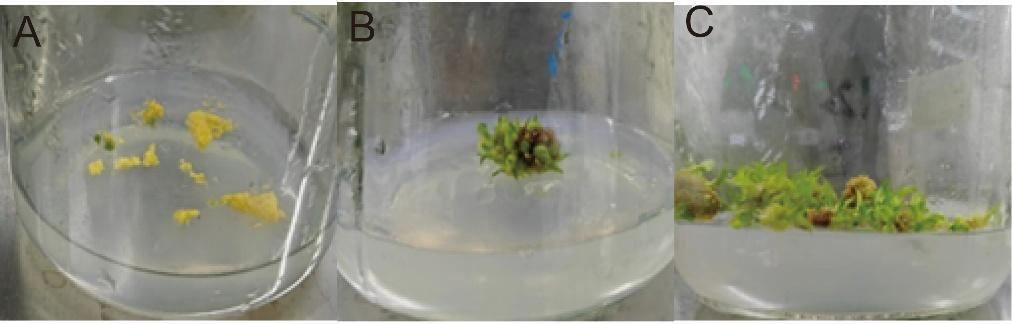
A sequence of photographs of protocorm induction in Dendrobium parishii. (A) Freshly inoculated seeds; (B) 15 days after inoculation; (C) 45 days after inoculation. The three photographs differ in field of view and magnification, so they cannot be used as a quantitative comparison of growth.Image: Feng et al. (2026), Research Square preprint rs-11481058/v1, Fig. 1, CC BY 4.0, Original figure extracted from the preprint PDF and saved as JPEG; not cropped or resized.
Dendrobium parishii is an epiphytic dendrobium with fragrant flowers. It can be propagated by asymbiotic seed culture, but over long periods in the flask it is not always possible to get shoot proliferation, biomass, rooting and leaf function all at once. This preprint compares three polyamines1 (putrescine, Put; spermidine, Spd; and spermine, Spm) for their effects on a range of plantlet traits when added to the medium.
The material came from cultivated plants from Chishui, Guizhou, kept in the greenhouse of a pharmaceutical company in Guangzhou (Guangzhou Caizhilin Pharmaceutical Co., Ltd.). Capsules were obtained by self-pollination and the seeds sown aseptically. Plantlet clumps were moved to half-strength MS medium. Each polyamine was tested at four concentrations, 0.3, 0.4, 0.6 and 0.8 mg/L, alongside paclobutrazol at 0.5 mg/L and an unsupplemented control. That makes 14 treatments, each starting with 15 vessels, all run in a single batch. At 120 days, 111 clumps from 55 vessels were measured. At 30 and 120 days the leaves were assayed for the maximum quantum efficiency of photosystem II (Fv/Fm), peroxidase, catalase, malondialdehyde and hydrogen peroxide.
The "best" treatment differed from trait to trait. Spd 0.8 had the highest mean shoot number (4.50 per clump). Put 0.8 had the highest mean leaf number (12.38) and fresh mass (6.87 g per clump). Spm 0.6 had the highest mean root number (28.88), while the control had the longest mean root length. In a permutation test that preserved the clustering of clumps within vessels, leaf number was the only one of nine morphological traits to reach significance after correction (adjusted P = 0.024). This test shows only that the treatments differed overall; it cannot say which treatment outperformed the control. On descriptive means (not tested), Fv/Fm at 120 days was highest in Spm 0.3 (0.755), Spd 0.8 (0.749) and Spm 0.6 (0.737), against 0.560 in the control.
The authors combined six morphological traits with Fv/Fm at 120 days into an exploratory composite index. The top three were Spm 0.6, Spd 0.8 and Spm 0.3 (0.696, 0.681 and 0.678), separated by only 0.018, and the authors themselves caution against reading them as three ranked best formulations. The biochemical measures did not follow this ranking either: Spm 0.6 had the lowest malondialdehyde but the highest hydrogen peroxide, and the control had the highest catalase activity. The authors conclude that the choice of polyamine should depend on the propagation goal, and that the results need to be confirmed in independent batches and at the stage of acclimatisation outside the flask.
Polyamines are small nitrogen-containing compounds that plants already make themselves; they take part in growth, development and stress responses. Here they were added to the culture medium as a supplement. ↩
Orchid plantlets are raised in sterile glass vessels, and the recipe of the culture medium affects how well they grow. This study, which has not yet been peer reviewed by a journal, added three small molecules called polyamines, one at a time, to the medium of Dendrobium parishii, a dendrobium orchid with fragrant flowers. Each was tried at four concentrations, and the plantlets were compared after four months.
No single recipe came first on everything. Some treatments gave more shoots, some gave more leaves and more weight, and some gave more roots. Among the morphological traits such as shoots, leaves, roots and weight, a strict statistical test found a difference between treatments only for leaf number, and the whole experiment was run as just one batch. The authors therefore treat these recipes as a shortlist of candidates, not a final answer, and they have not yet tested how the plantlets perform once they leave the flask.
Feng, C., Liu, J., Ma, E., Chen, Y., Zhang, M., Zhao, Z., & Yang, D. (2026). Effects of polyamine type and concentration on growth and physiological traits of in vitro Dendrobium parishii plantlets [Preprint]. Research Square. doi:10.21203/rs.3.rs-11481058/v1
Open accessMycology · 2026-11-11 · Sweden, Czech Republic, Italy (latitudes 57°13′ to 41°57′)
In four European terrestrial orchids, the mycorrhizal fungal community varies mainly with orchid species; fungal diversity is unrelated to latitude, while the orchids' fungal specificity decreases with increasing latitude
Whether a community of orchid mycorrhizal fungi (OMF) is set by the host orchid, by geography or by soil is the question this study tries to take apart. Drawing on the literature, the authors chose four European orchids: Orchis mascula and Platanthera bifolia, with higher mycorrhizal specificity, and Anacamptis morio and Dactylorhiza sambucina, with lower specificity. In May–June 2022 they sampled 10–11 populations of each species in Sweden, the Czech Republic and Italy (latitudes 57°13′ to 41°57′), taking three roots from each of five to six plants per population, 214 plants in all; in each population they also took a mixed soil sample at 5–10 cm depth from 10 points and analysed available calcium, phosphorus, pH, carbon, nitrogen and soil texture.
The fungi were identified in two ways: by isolating pelotons from root cortical cells, culturing them and sequencing the cultures, and by ITS2 metabarcoding of root sections directly, keeping only the three rhizoctonian families in both cases. Metabarcoding gave 57 operational taxonomic units (OTUs): 30 in Tulasnellaceae, 26 in Ceratobasidiaceae and one in Serendipitaceae, the last found only in a single D. sambucina plant from one Czech population. Of these 57 OTUs, 47.4% were also recovered in culture, and one further OTU was obtained by culturing alone; counted separately for each orchid species and country, however, the share recovered in culture averaged only 29.5%, ranging from 6.6% for O. mascula in Sweden to 62.5% for D. sambucina in Italy.
In the variance partitioning of community composition, orchid species identity alone accounted for 17% of the total variation, the largest share of any factor; soil parameters, distance between sites and their combinations each accounted for less than 5%. P. bifolia associated mainly with Ceratobasidiaceae and the other three species predominantly with Tulasnellaceae; among them, O. mascula was dominated in all three countries by one and the same Tulasnellaceae OTU, whose sequence is more than 97% similar to Tulasnella helicospora. Neither OTU richness nor the Shannon diversity index was related to the latitude of the population, but mycorrhizal specificity, measured by the standardized Levins' niche breadth index, decreased significantly with increasing latitude; in other words, populations at higher latitudes had a wider range of fungal partners.
Taken species by species, the orchids did not respond alike: distance between sites explained 19% of the community variation in P. bifolia, soil parameters explained 20% in A. morio and 6% in O. mascula, and in D. sambucina neither distance, soil nor their interaction explained more than 2%. The authors report that available calcium was significantly related to community composition in all four orchids, and suggest that calcium may be an integrative proxy for soil chemistry and structure as a whole, since it is linked to pH, clay content and phosphorus availability; this mechanism was not tested experimentally. As for specificity falling with latitude while diversity stays the same, they offer two possibilities: greater turnover in fungal composition among high-latitude populations, or more sharing of fungal partners among orchid species at high latitudes; both remain hypotheses.
Orchid seeds have no endosperm and can germinate only with the help of suitable fungi, which also move into the cells of the orchid's roots. The researchers wanted to know what decides which fungi an orchid pairs up with: the orchid species, the place where it grows, or the soil. In May and June 2022 they collected roots from 214 plants of four European orchids in Sweden, the Czech Republic and Italy, grew the fungi out of the roots, sequenced the fungal DNA in the roots directly, and analysed the soil of each population as well.
Of the factors they looked at, which orchid species it is said most about the make-up of the fungal partners, although it explained only about 17% of the differences and most of the rest remains unexplained. From south to north, the number of fungal types in the roots did not rise or fall with latitude; what changed was how choosy the orchids were, and the higher the latitude, the less specific they became. Calcium in the soil was associated with the fungal make-up, but the authors think calcium may simply stand in for the overall chemistry of the soil, and no experiment has yet confirmed an effect of calcium itself. All four are terrestrial orchids rooted in soil (Orchis mascula, Platanthera bifolia, Anacamptis morio, Dactylorhiza sambucina), not epiphytic orchids growing on trees, so the results cannot be applied directly to epiphytic orchids.
Pandit, A., de Paula, C. C. P., Nageen, Y., Těšitelová, T., Mudrák, O., Kotilínek, M., Duffy, K. J., Sletvold, N., & Jersáková, J. (2026). Species-specific responses of orchid mycorrhizal associations to geographic and edaphic gradients. Mycology. Advance online publication. doi:10.1080/21501203.2026.2727210
Open accessPlant Science Today · 2026-11-12 · Sarl Hkam Village, Putao Township, Kachin State, Myanmar
Ten orchid species recorded at a village in Putao Township, Kachin State, Myanmar; the authors treat 3 as new records at township level, pending confirmation from specimens
Kachin State in northern Myanmar has the highest plant diversity in the country. Putao Township, within it, has steep terrain, high rainfall and extensive evergreen forest, yet for many places the botanical information goes no further than checklists. This paper records 10 orchid species, in 10 genera, from around Sarl Hkam Village in Putao Township. For each species it gives a morphological description made from living plants, observations of the pollinia, photographs and coordinates.
Going by the paper's species descriptions, 4 of the 10 are described as epiphytic: Appendicula cornuta, Bulbophyllum delitescens, Robiquetia spathulata and Uncifera obtusifolia. Coelogyne articulata is described as an epiphyte or lithophyte, and Thunia alba var. bracteata as lithophytic. The remaining 4 are terrestrial: Brachycorythis helferi, Calanthe sylvatica, Crepidium orbiculare and Peristylus constrictus. The paper itself does not count the species in each growth form; the tally above is ours, compiled from the descriptions. Every record is placed beside the main road between Sarl Hkam Village and Putao, with the same set of coordinates, at 359 m above sea level.
The authors note that B. helferi, C. orbiculare and R. spathulata have no record from Putao Township in the checklists and floras they consulted, and so treat them as new township-level records. The other 7 species had already been recorded from Putao or elsewhere in Kachin State. A key to the 10 species is appended at the end.
The authors themselves state that identification rested mainly on field photographs, coordinate records and the morphology of living plants, that some identifications should be regarded as provisional, and that the new records still need to be confirmed with specimens and, possibly, molecular evidence. The survey period was limited, and flowering seasons may also have restricted the number of species recorded.
Kachin State in northern Myanmar has a great many orchid species but is still poorly surveyed. Near a village in Putao Township, two researchers photographed and described each orchid they came across in flower, noting 10 species in all. Some are epiphytes growing on tree trunks; others grow on rocks or in the ground.
For 3 of the 10, the literature the authors checked has no record from this township. The authors are frank, though, that identification relied mainly on photographs and observation on site, and that some species still need specimens to confirm them. The list is therefore best read as a preliminary one.
Kyaw Nyein, & Shakir Ullah (2026). Documentation of orchid diversity in Sarl Hkam Village, Kachin State, Myanmar. Plant Science Today. Advance online publication. doi:10.14719/pst.15238
Open accessAmrit Journal · 2026-11-15 · Jukethali Community Forest, Lalitpur District, Bagmati Province, Nepal
A community forest in Lalitpur, Nepal, yields 49 orchid species, about six in ten of them growing only as epiphytes
Orchid research in Nepal has mostly taken the form of checklists at national or broad regional scale, and inventories of a single community forest are few. This paper surveys Jukethali Community Forest in Mahankal Rural Municipality, Lalitpur District, near Kathmandu. The forest lies at about 1425 to 2400 m, and its vegetation is mixed broad-leaved forest dominated by Alnus, Rhododendron, Schima, Castanopsis and Quercus.
In September and December 2024 the authors searched along existing trails and deeper inside the forest. For terrestrial orchids they searched the forest floor, leaf litter, rocks and soil; for epiphytic orchids they inspected by eye the trunks, branches and fallen branches within reach. Because they could not get into the canopy, observations of epiphytic orchids were limited to the accessible parts. Species were identified from morphological characters, and voucher specimens of some species were collected and deposited at the ASCOL Herbarium.
In all, 49 species in 21 genera were recorded, between 1486 and 2230 m. The genus with most species was Coelogyne (11), followed by Bulbophyllum (6), Calanthe (5), Pinalia (4) and Dendrobium (3). According to the text of the paper, 29 species grow only as epiphytes and 13 only as terrestrials; 5 are both epiphytic and lithophytic, 1 is both terrestrial and epiphytic (Liparis cespitosa), and 1 grows in all three ways (Thunia alba). The epiphytic species recorded include Coelogyne cristata, Dendrobium densiflorum, Rhynchostylis retusa and Vanda cristata.
The authors suggest that the predominance of epiphytic species may be related to forest structure and the host trees available, and point out that community-managed forests have value for conserving orchids outside protected areas. They also make clear that the checklist reflects only the timing and extent of two surveys and cannot be taken as the complete orchid diversity of the area.
In the hills near Kathmandu, the capital of Nepal, there is a forest managed by the local community. Researchers visited once in autumn and once in winter 2024, looked for orchids along the trails and inside the forest, and noted 49 species in all.
About six in ten of them grow only on trees; these are the epiphytic orchids. A dozen or so grow in the ground, and a few can grow both on trees and on rocks. The researchers could not climb into the canopy and checked only the trunks, branches and fallen branches within reach, so whatever lives up in the canopy lay outside what this survey observed.
Nyaupane, S., Bhandari, P., Pokhrel, M., & Bajracharya, D. M. (2026). Documentation of orchid diversity in the Jukethali Community Forest, Lalitpur. Amrit Journal, 6(1), 105–114. doi:10.3126/amritj.v6i1.102264
Air plants & bromeliads1
Open accessPlant Systematics and Evolution · 2026-11-09 · Mexico (pine-oak forests, 1150–3200 m above sea level)
The Mexican endemic Tillandsia erubescens species group: plastid and nuclear species trees broadly agree, but most individual nuclear gene trees tell their own story
In groups that diverged only recently, relationships are often hard to work out, because the trees inferred from different genes frequently contradict one another. This study takes the Tillandsia erubescens species group, which belongs to subgenus Tillandsia of the air plant genus Tillandsia, and tests how much discordance there is between plastome and nuclear data, and among the individual nuclear gene trees. The paper says the group currently has 8 recognised species, with unbranched, pendulous inflorescences, distributed in the pine-oak forests of Mexico at 1150 to 3200 m above sea level; an earlier plastome study estimated that it split from its sister lineage about 1.88 million years ago.
The authors sampled all 8 species of the group (T. andrieuxii, T. arroyoensis, T. erubescens, T. macdougallii, T. oaxacana, T. pseudooaxacana, T. quaquaflorifera, T. tecolometl), plus 8 species from the sister lineage and T. punctulata to root the trees. The data come from Hyb-Seq, which combines target capture with shallow sequencing of the genome. The plastomes are sequences already published from the same sequencing project, realigned here, and the final alignment used for analysis was 132,214 bp long; the nuclear data are 295 loci newly assembled for this study, 598,925 bp in total once the introns flanking the exons are counted. Including the introns raised the number of parsimony-informative sites from 2,209 to 10,662, about 4.8 times as many.
When the 295 nuclear gene trees were examined one by one, the gene trees agreeing with the nuclear species tree made up only 1.1% to 39.32% at each node (PhyParts analysis); most of the rest supported other branching patterns. Gene concordance factors (gCF) ranged from 2.03% to 42.4% and site concordance factors (sCF) from 28.6% to 60.9%, with sCF at several nodes close to the 33% expected by chance; concordance was highest for the pair T. tecolometl and T. macdougallii (gCF 42.4%, sCF 60.9%). Collapsing the poorly supported nodes of the gene trees and recalculating did not change the overall picture.
For all this disagreement among gene trees, the combined results are fairly stable: the plastid tree and the nuclear species tree both place the 8 species in a single monophyletic group, and there is no strongly supported conflict between plastid and nuclear data inside the group. The two statistically supported conflicts both fall among the outgroups, and concern the positions of T. prodigiosa and T. carlos-hankii respectively. The authors regard this picture as consistent with rapid, recent diversification, and think it may stem both from uneven amounts of signal across loci and from biological processes such as incomplete lineage sorting and hybridisation; but they also say plainly that the present analyses can only quantify how much conflict there is and where it lies, and cannot determine which process produced it.
To draw up a family tree for a set of closely related air plants, scientists usually compare DNA. The trouble is that different genes are like different members of a family: they do not all remember the family history in the same way. This study took a small group of air plants found only in Mexico (Tillandsia erubescens and its 7 close relatives, which grow in pine-oak forests at 1150 to 3200 m above sea level) and compared the stories told by the complete chloroplast DNA and by 295 gene regions from the cell nucleus.
The result: with all the data taken together, the chloroplast and the nucleus draw broadly the same family tree, and these 8 species really are one family; but taken one gene at a time, most genes draw a tree that differs from the overall conclusion. The authors regard this as consistent with these plants having diversified rapidly over a short period, but the present data cannot tell whether the cause is that the genes themselves carry too little information, that the species once hybridised, or that genetic variation in the ancestors was passed at random to different descendants.
Martínez-García, A. L., Granados Mendoza, C., Cruz Plancarte, D., Vera-Paz, S. I., Salazar, G. A., Hornung-Leoni, C. T., Magallón, S., Flores-Cruz, M., Granados-Aguilar, X., & Wanke, S. (2026). Gene tree discordance characterizes shallow evolutionary scales of Tillandsia subgenus Tillandsia (Bromeliaceae, Poales). Plant Systematics and Evolution, 312(6), 59. doi:10.1007/s00606-026-02033-9
Aroids1
Open accessNovyi byulleten' Glavnogo botanicheskogo sada (New Bulletin of the Main Botanical Garden; Tsitsin Main Botanical Garden, Moscow) · 2026-11-09 · Near Calang, Aceh Province, Sumatra, Indonesia (type prepared from a plant cultivated at the Tsitsin Main Botanical Garden, Moscow)
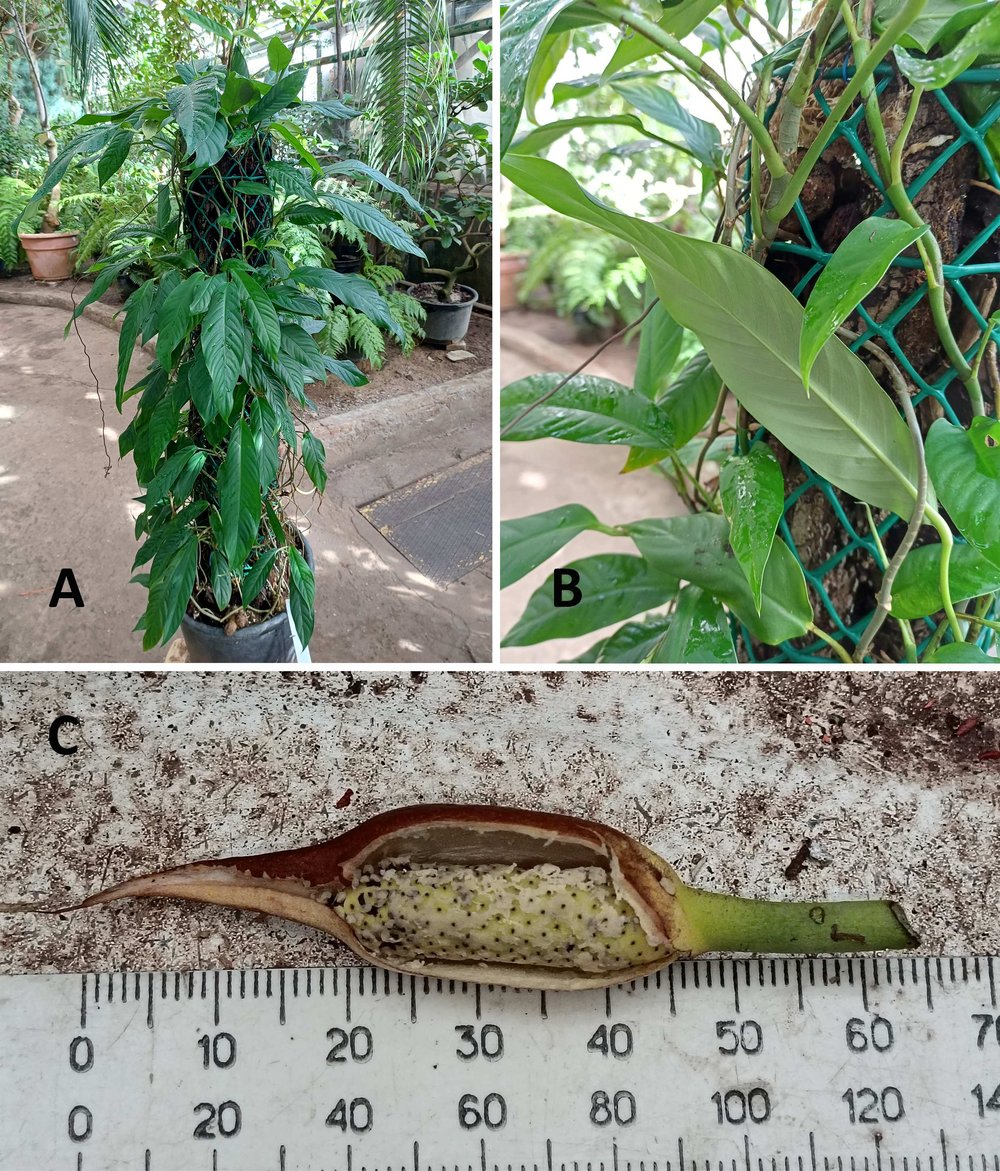
A shoot fragment collected in Aceh, Sumatra, flowers for the first time after nearly seven years in a Moscow greenhouse and is described as the new species Rhaphidophora persistispatha
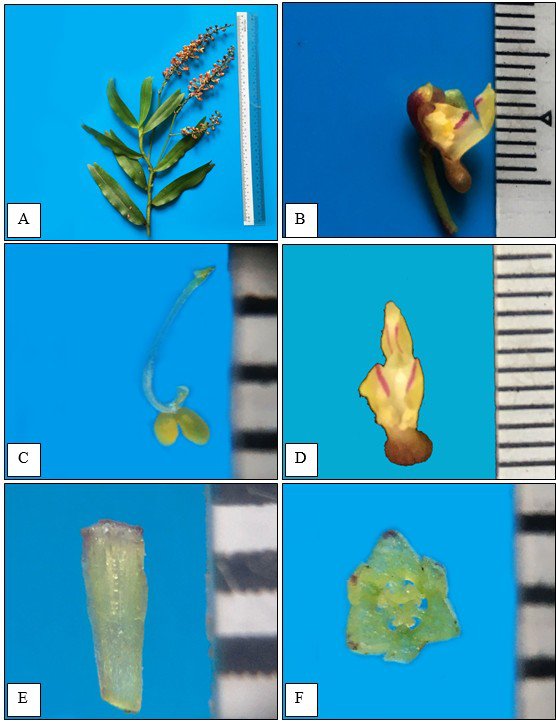
Researchers at the Tsitsin Main Botanical Garden in Moscow and the University of Florence have described a new species in the aroid genus Rhaphidophora, Rhaphidophora persistispatha Serebryanyi & P.C.Boyce. The original material was a piece of non-flowering shoot collected by Dmitry Loginov on 22 October 2019 near Calang in Aceh Province, Sumatra, Indonesia, in a recent clearing at the edge of evergreen tropical forest on the right bank of the Krueng Cangeh river; the paper records that the shoot was collected in an elephant’s footprint. Once rooted, it was grown in the garden’s greenhouses from late autumn 2019, and it flowered for the first time around 23 September 2026, producing only one inflorescence.
The holotype was prepared from this cultivated plant on 1 October 2026 (greenhouse accession number 2019.18773). It consists of one herbarium specimen on two sheets and one spirit specimen containing only an inflorescence, and is kept in the MHA herbarium. The authors describe the plant as a slender vine with twisting stems, creeping or occasionally climbing low, with stems up to 5 mm in diameter and clasping roots, densely covered in soft white hairs, arising from the nodes and internodes; the seedling is unknown, and so is the infructescence. The leaf blades are lanceolate to oblanceolate and markedly oblique, 18–23(24) cm long and 5.5–6(6.5) cm wide, with minutely revolute margins, and the larger leaves are bullate, raised in blisters between the primary lateral veins.
The main diagnostic characters include: a slender plant that creeps or climbs low; a persistent petiolar sheath that extends almost to the geniculum (the knee-like joint) at the top of the petiole and dries dark brown to almost black; and a very small spathe (3.5 × 0.8–1 cm) that stays on the inflorescence throughout flowering, which is where the epithet persistispatha comes from. The spadix is sessile and cylindrical, 2.5 × 0.6–0.7 cm. The authors assign the species to the informal ‘Hongkongensis Group’ within the genus and compare it with R. talamauana, R. ustulata and R. megastigma from Sumatra: all three are robust high climbers whose petiolar sheaths fall early and whose spathes are larger, and in R. megastigma the spathe is shed at flowering.
The paper also reviews the 17 informal morphological groups within the genus, and notes that these groupings have not yet been tested by molecular phylogenetic analysis. By the authors’ count, 15 species of Rhaphidophora were already recorded from Sumatra, 4 of them endemic; the new species is so far known only from the one locality where it was originally collected.
In 2019, someone collected a small piece of a vine’s shoot at a forest edge in Aceh Province, in the north-west of the island of Sumatra; according to the record, it was lying in an elephant’s footprint. The piece was later taken to a botanical garden greenhouse in Moscow, where it rooted and grew, and was kept for nearly seven years without flowering. Only when it finally produced its first inflorescence in September 2026 could researchers confirm that it was a new species, one that science had no name for, and they named it Rhaphidophora persistispatha.
It belongs to the arum family (Araceae). Its stems are very thin, and it creeps along or occasionally climbs a little way up. The name means ‘persistent spathe’: the bract that wraps the inflorescence is very small, about 3.5 cm long, and does not fall off when the plant flowers. At present it is known from just that one original collecting site in the whole world, and what its seedlings and fruits look like is still unknown.
Serebryanyi, M. M., Boyce, P. C., & Drokina, V. G. (2026). Novyi vid roda Rhaphidophora Hassk. (Araceae: Monstereae) iz severnoi Sumatry [A new species of the genus Rhaphidophora Hassk. (Araceae: Monstereae) from north-west Sumatera]. Novyi byulleten' Glavnogo botanicheskogo sada [New Bulletin of the Main Botanical Garden], 2(3), 29–40. doi:10.35102/cbg.2026.98.99.003
Epiphytic cacti1
Open accessAbstract onlyFlora · 2026-11-10
Flowers of representative species of Aporocactus, Selenicereus and Weberocereus: very different in outward form and flowering time, yet with a shared basic pattern in their internal tissues
This paper in Flora reaches a ‘mixed’ verdict on the flowers of the hylocereoid clade: part of their structure is fairly conserved, while other aspects of their form are highly plastic. The subjects are representative species of three genera in this clade of the tribe Hylocereeae, Aporocactus, Selenicereus and Weberocereus. The authors took flower buds before opening and mature flowers, measured them and prepared tissue sections, and compared structural data from the perianth, the androecium and the gynoecium side by side. Their starting point is that the morphology and anatomy of flowers in the cactus family have never received much study.
What the flowers share lies at the anatomical level: all the taxa examined are rich in secretory tissue, with large numbers of idioblasts and mucilage cells, and their vascular bundles are amphicribral. There are anatomical differences as well, found in the features of the epidermis, the thickness of the cuticle, and the structure of the style and the pericarpel1, including whether papillae are present, and in how appendages such as scales, spines, bristles and wool vary.
According to the abstract, the flowers of these species differ considerably in size, symmetry, time of flowering and structural organisation: those of Aporocactus are small, open by day and are zygomorphic (bilaterally symmetrical); those of Selenicereus and Weberocereus are large, open at night and are actinomorphic (radially symmetrical). The authors take this to reflect different pollination syndromes, and link the variation to ecological adaptation and to diverse pollination strategies; they also consider that some of these characters can be of use in taxonomic interpretation.
The stem-derived tissue that surrounds the ovary in a cactus flower. This explanation is background knowledge and does not come from the paper’s abstract. ↩
Within one group of cacti, some species have small flowers that open by day and are symmetrical from left to right, while others have large flowers that open only at night and are radially symmetrical. This study chose representative species of three genera (Aporocactus, Selenicereus, Weberocereus), measured their buds and flowers, cut them into thin sections, and compared each part of the flower under the microscope.
The researchers found that although these flowers look very different on the outside, the tissues inside share a common groundwork; for example, all of them have many cells containing mucilage. The real differences are in the epidermis, the thickness of the cuticle, and whether the style and the tissue around the ovary bear projections, scales, spines or hairs. The authors think the differences in the outward form of the flowers are related to the way each is pollinated, though this is an interpretation drawn from the form of the flowers.
Cara, Á. L., Domínguez, Y., Achkar, M. T., da Silva Santos, V. K., & de Almeida, O. J. G. (2027). Floral morphoanatomy of representatives of the hylocereoid clade (Cactaceae: Hylocereeae). Flora, 346, 153110. doi:10.1016/j.flora.2026.153110
Across groups & ecology3
Open accessAbstract onlyBotanical Sciences · 2026-11-09 · Ejido Benito Juárez, El Plan, municipality of Cacahoatán, Chiapas, Mexico
Endophytic fungi from three epiphytes in Chiapas, Mexico: 28 isolates selected for phosphate solubilisation, indole-3-acetic acid production and tannic acid degradation in culture
What this study delivers is a list of fungi. From the endophytic fungi of three epiphytes, the authors selected 28 isolates according to how well they solubilised inorganic phosphate, produced indole-3-acetic acid (an auxin, a plant growth hormone) and degraded tannic acid in culture; 7 of them were isolated frequently whether the plants grew in groups or on their own. The three plants are the orchid Brassia verrucosa, the bromeliad Tillandsia guatemalensis and a moss of the family Dicranaceae, collected in 2021 to 2022 at Ejido Benito Juárez, El Plan, in the municipality of Cacahoatán, Chiapas, Mexico.
The starting point is the two ways in which epiphytes grow on a phorophyte1: sometimes the plants grow grouped together, sometimes a plant grows alone. The authors note that all these plants harbour a variety of endophytic fungi, some with properties that promote plant growth, and they wanted to know which culturable fungi of this kind are present in plants growing each way; so both grouped and solitary plants were collected for isolation. Besides the three abilities above, the pH of the culture medium was measured, and both indole-3-acetic acid and pH were assessed with and without L-tryptophan; the selected isolates were also identified by morphology and by molecular methods.
The best phosphate solubiliser and the best indole-3-acetic acid producer were not the same fungus. Indole-3-acetic acid production was highest in an isolate of Fusarium sp., with or without L-tryptophan; for the highest producers, the pH of the culture medium was 4.0 with L-tryptophan and 4.5 without. Phosphate solubilisation was most marked in Aspergillus versicolor, and most of the selected isolates were able to degrade tannic acid. In closing, the authors name Aspergillus foetidus, two species of Colletotrichum (C. chrysophilum and C. kahawae), the isolate coded R3-T-P1-H-C19 and Fusarium sp. as fungi that could perhaps serve as inoculum for propagating epiphytes and raising them in vitro; all of these are abilities measured in culture, and the abstract does not mention any trial in which the isolates were inoculated onto plants.
Orchids, air plants and mosses that grow on trees all have fungi living inside them that cannot be seen with the naked eye. In Chiapas, Mexico, a research team collected an orchid (Brassia verrucosa), an air plant (Tillandsia guatemalensis) and a moss, isolated these fungi, grew them in culture dishes, and tested whether they could do three things: turn phosphorus that plants find hard to use into a soluble form, make a plant growth hormone, and break down tannic acid.
In the end they picked out 28 fungi that performed relatively well, and the authors think a few of them might serve as an ‘inoculant’ when epiphytes are propagated artificially. Judging from the abstract we have read, however, these abilities were measured in culture, and the abstract does not mention what effect the fungi have once inoculated back onto plants.
Aguilar-Díaz, T., Damon, A., Guillén-Navarro, K., Cach-Pérez, M. J., Calixto-Romo, M. de los Á., Mejía-González, G., & García-Fajardo, L. V. (2026). Plant growth promoting endophytic fungi from three species of tropical epiphytes from Chiapas, Mexico. Botanical Sciences. Advance online publication. doi:10.17129/botsci.3957
Open accessJournal of Zoological and Botanical Gardens · 2026-11-13 · Sítio Roberto Burle Marx, Barra de Guaratiba, Rio de Janeiro, Brazil
First systematic inventory of epiphytes along the visitor route of the Sítio Roberto Burle Marx in Rio: 68 taxa, about 35% of them not native to the area
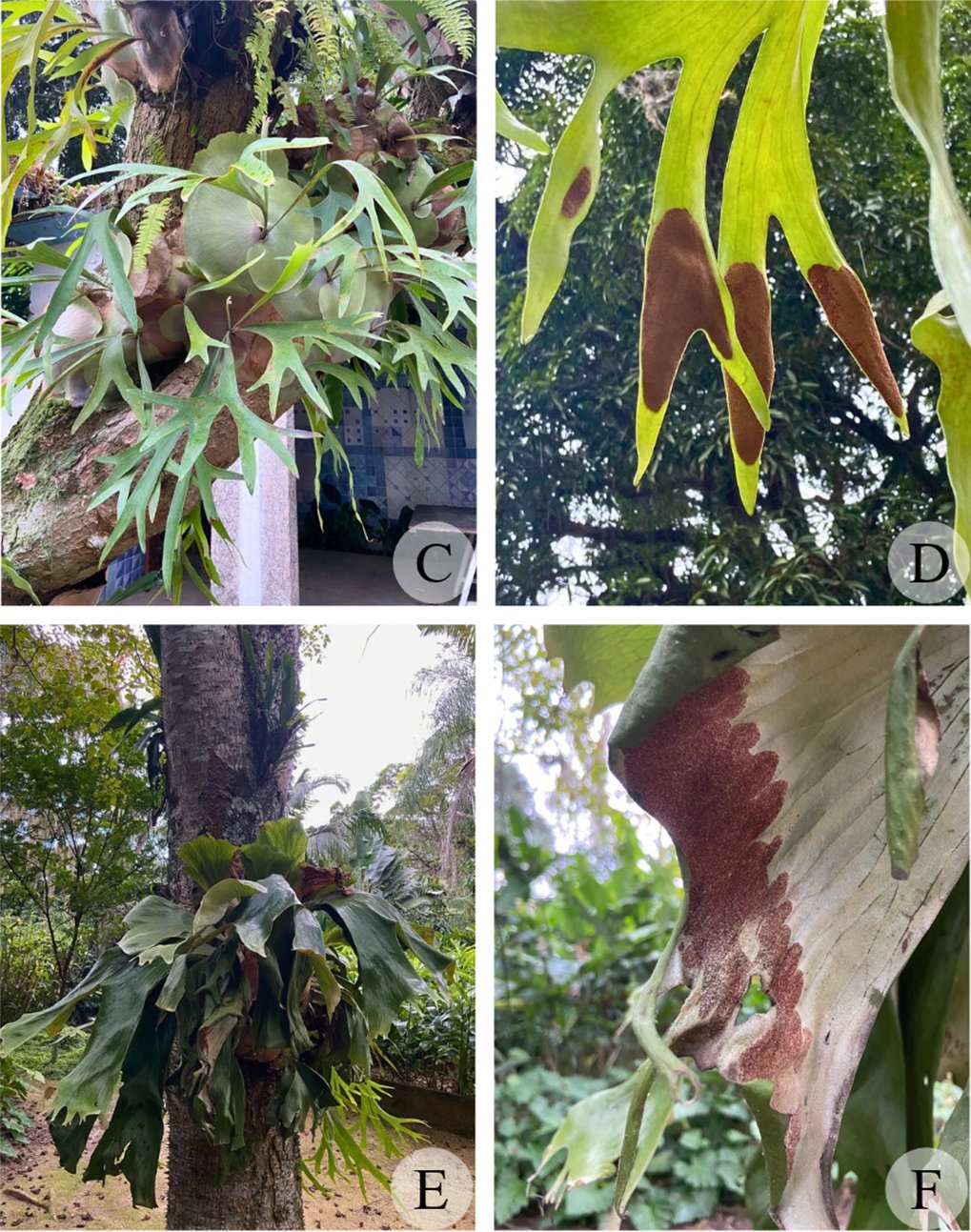
Two staghorn ferns from the paper’s Figure 5, ‘Epiphyte ferns II’: Platycerium bifurcatum (C, D) and Platycerium wallichii (E, F).Image: Blezer Plumm et al. (2026), Journal of Zoological and Botanical Gardens 7(4): 54, Figure 5, panels C to F, CC BY 4.0, Panels C, D, E and F cropped from the 16 panels of the original figure and rearranged, from their original positions in two separate rows, into two rows one above the other (C, D above; E, F below); not rescaled.
The Sítio Roberto Burle Marx (SRBM below) lies in Barra de Guaratiba, in the municipality of Rio de Janeiro, Brazil, and covers about 40.5 ha. Its living plant collection was built up mainly by the landscape architect Roberto Burle Marx through collecting expeditions, donations and exchanges, and the site was inscribed on the UNESCO World Heritage List in 2021. The property is connected to remnant forest of the Pedra Branca State Park. The authors note that its epiphytes had until now been recorded only in scattered form, in lists, herbarium specimens and studies of particular families, and had never been inventoried in full.
The survey followed the 2.2 km paved visitor route, recording all vascular epiphytes on every phorophyte1 within 5 m of either side of the route; the higher parts of the trees (up to about 10 m) were observed with binoculars. Over the 14 months from May 2024 to June 2025, a single observer surveyed weekly, 52 times in all. Only holoepiphytes and secondary hemiepiphytes growing on phorophytes were counted, and rupicolous and terrestrial populations were left out; historical specimen records connected with the site, held in a number of herbaria, were also compared.
In all, 68 taxa were recorded (64 species and 4 subspecies), in 31 genera and 10 families. There were 56 angiosperm taxa: Araceae had the most with 20, followed by Cactaceae with 16, Bromeliaceae with 13 species, Orchidaceae with 6 species and Piperaceae with 1 species. There were 12 fern taxa, 8 of them species of Polypodiaceae. Of the total, 44 (64.7%) are native plants with confirmed occurrence in the state of Rio de Janeiro, 9 (13.2%) are native to Brazil but have no confirmed natural occurrence in that state, and 15 (22.1%) are exotic, among them the staghorn ferns Platycerium bifurcatum and Platycerium wallichii. Of the 68 taxa, 45 had no earlier specimen record from the site, while the other 23 are represented by specimens collected in cultivation between 1962 and 2000.
A total of 1983 phorophytes were observed along the route, 1282 of them identified at least to family, and of those 48.1% were palms (Arecaceae). The epiphytes were very unevenly spread: 48 taxa occurred on only 1 to 5 phorophytes, 24 of them on a single phorophyte, whereas the most common were Spanish moss (Tillandsia usneoides, 421 phorophytes), Microgramma vacciniifolia (392) and Tillandsia mallemontii (376). The authors stress that this is a managed collection, so frequency of occurrence cannot be read as natural abundance or as a preference for particular phorophytes. On the IUCN Red List, 5 taxa are in globally threatened categories, all of them Cactaceae: Rhipsalis pentaptera is Critically Endangered (the plants at the site are rescued material brought in 2024 by botanists from the Rio de Janeiro Botanical Garden), Rhipsalis crispata and Rhipsalis pacheco-leonis are Endangered, and Rhipsalis oblonga and Weberocereus bradei are Vulnerable. Among the exotics, golden pothos (Epipremnum aureum) and arrowhead vine (Syngonium podophyllum) are listed as invasive exotic species in Brazil; the authors recommend monitoring them and controlling their spread, and present the inventory as a baseline for future management.
In Rio de Janeiro, Brazil, there is an estate left by the renowned landscape designer Roberto Burle Marx. On the trees of its gardens grow epiphytes that he gathered in his day and others brought in since; some may also have arrived by themselves from the adjoining forest, though this study did not test that directly. Over 14 months, the researchers went along the 2.2 km visitor path every week, counting the vascular epiphytes on the trees one by one, and recorded 68 kinds in all (subspecies included), among them aroids, cacti, bromeliads, orchids and ferns.
About two-thirds are plants native to the Rio area. The remaining 35% or so either have no confirmed natural occurrence in the state of Rio de Janeiro or come from abroad, and the authors think they were very probably introduced by people; the staghorn ferns (Platycerium), which do not come from Brazil, are an example. The most common epiphyte is Spanish moss (Tillandsia usneoides), hanging on more than four hundred trees; yet 24 kinds were found on only one tree. The list also includes 5 globally threatened cacti, most of them mistletoe cacti (Rhipsalis). The authors see the list as a working baseline for the site’s future care and monitoring of the collection.
Blezer Plumm, M., Gonzaga, D. R., & Sakuragui, C. M. (2026). Living collection of vascular epiphytes along the visitor route of the Sítio Roberto Burle Marx, Rio de Janeiro, Brazil. Journal of Zoological and Botanical Gardens, 7(4), 54. doi:10.3390/jzbg7040054
PreprintResearch Square · 2026-11-13 · Neotropics (the Americas); specimens from the New York Botanical Garden herbarium (NY)
Preprint: a search through herbarium specimens for leaf domatia in Neotropical Melastomataceae finds 568 species with small (putative) domatia not inhabited by ants, and merges 50 older terms into 10 types
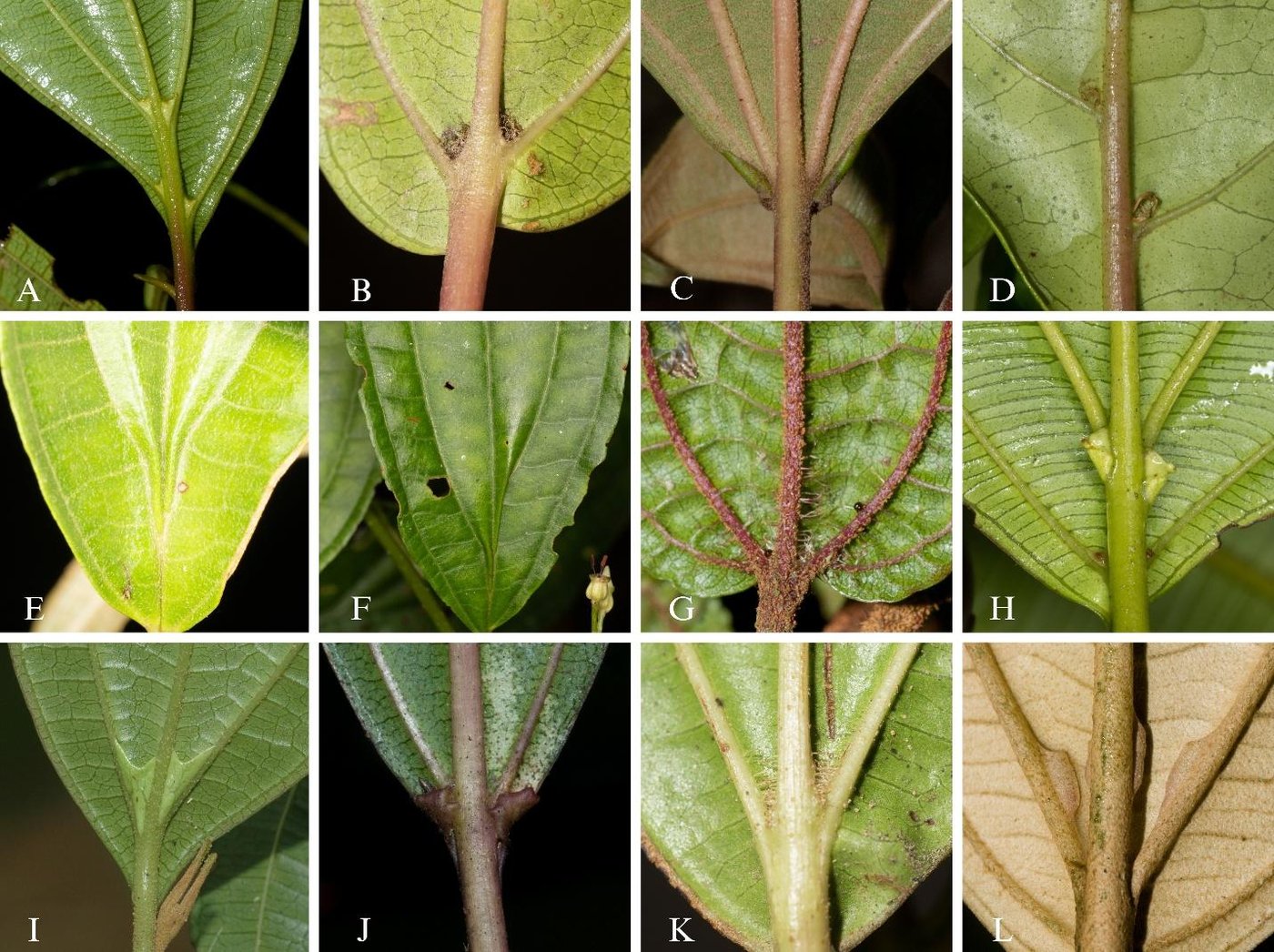
Diversity of small leaf domatia in Melastomataceae. A: Miconia ecuadorensis; B: Miconia sp.; C: Axinaea macrophylla; D: Miconia glabrifolia; E: Miconia aff. neomicrantha; F: Miconia cf. neomicrantha; G: Miconia lachnoclada; H: Blakea henripittieri; I: Miconia doriana; J: Meriania cuzcoana; K: Miconia brevis; L: Chalybea macrocarpa. All photographs by FAM (the abbreviation used in the original caption).Image: Samra et al. (2026), Research Square preprint rs-11085370/v1, Fig. 1, CC BY 4.0, Reduced in size; all twelve panels of the original figure (A to L) retained.
Domatia are structures on plants that give other organisms somewhere to live. In Melastomataceae, the large domatia inhabited by ants (myrmecodomatia, usually 1 cm or more long) have been studied fairly well, while the small ones on leaves, under 1 cm and without ants, have long been overlooked, and the terms used for them are in disarray. This preprint from a team at the New York Botanical Garden deals with the second kind. Such small domatia are often called acarodomatia (mite domatia), but the authors deliberately avoid the word, on the grounds that what lives in them is not necessarily a mite; they suggest using it only where mites are confirmed as the symbiotic partner.
Starting from the Plants of the World Online checklist, corrected against an expert’s list, the authors arrived at a list of 3,850 Neotropical species of Melastomataceae. They then examined the holdings of the New York Botanical Garden herbarium (NY) species by species, and compiled the records in 83 publications dating from 1903 to 2025. In the end, presence or absence of domatia was established for 3,179 species, 83% of the list; for 663 species there were no specimens or information to consult, and for 8 the findings were unclear. The conclusion section states that 3,581 specimens were used in all.
The result is 643 species with leaf structures that can be regarded as domatia or possible domatia. Of these, 75 have ant domatia and the other 568 have small leaf domatia, and 331 of those 568 had not been recorded in the literature the authors reviewed. The authors merged 50 terms used in the literature for domatium morphology into 10 types: apical, marsupiform, petiolar, pinwheel, pit, recessed, revolute, tuft, venous and volcano. Of these, recessed and venous are newly proposed names, and 3 subtypes are set up under marsupiform. The most common is the marsupiform type, a thin membrane stretched between veins (335 species). Of the two subfamilies in the Neotropics, only Melastomatoideae has leaf domatia, and they occur in 12 of its 19 tribes.
As for who lives in them, the evidence is still preliminary. Until now mites had been recorded in the domatia of only 5 species of Melastomataceae; this study raises the number to 12, covering four types: marsupiform, recessed, tuft and pit. In the apical, petiolar, pinwheel, revolute, venous and volcano types, no invertebrates have yet been observed. The authors also caution that other leaf features, such as raised veins, indumentum and scales covering the vein axils, can offer hiding places just as well, and that the boundary between domatia and non-domatia is not clear; among the species that have domatia, there are 246 in which they are sometimes present and sometimes absent.
Some plants grow little pockets, small pits or tufts of hair on their leaves, mostly in the corners where veins meet, which may let small animals hide inside; structures of this kind are called domatia. The large domatia that house ants have had more study, but this preprint, which has not been peer reviewed, is interested in another kind: small domatia under 1 cm that are not occupied by ants. The researchers examined, species by species, the specimens of tropical American Melastomataceae in the New York Botanical Garden herbarium, added the literature of more than a hundred years, and noted for over three thousand species whether such structures are present or not.
They found 568 species with small domatia, 331 of them not mentioned in the earlier literature; scholars had used 50 different terms for these structures, and this study sorts them into 10 categories. But as to who actually lives in these ‘little rooms’, mites have so far been seen on only 12 plant species, and for several types no occupant has been seen at all, which is why the authors call them ‘putative’ domatia.
Samra, K. E., Dagnatchew, T., Mehjabin, M., Morris, N., & Michelangeli, F. A. (2026). Synonymized classification of leaf domatia: a comprehensive survey of Neotropical Melastomataceae [Preprint]. Research Square. doi:10.21203/rs.3.rs-11085370/v1